
14th AICIF Day Two: Dr. Syarah Syahira Highlights Strategies for Financial Resilience and Islamic Finance Governance
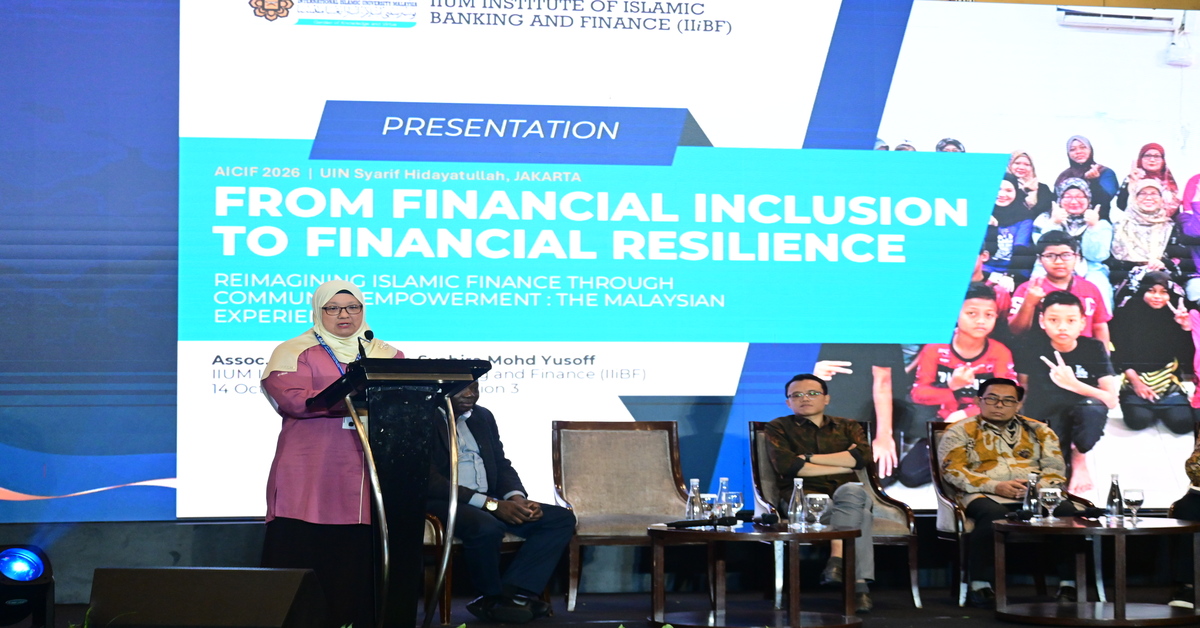
SERPONG, OCTOBER 14, 2026 — The second day of the 14th ASEAN Universities International Conference on Islamic Finance (AICIF) at the Swiss-Belhotel Ballroom, Serpong, was marked by high enthusiasm. During the panel discussion session, prominent Malaysian Islamic economics expert Dr. Syarah Syahira from IIUM Malaysia delivered a comprehensive presentation on financial resilience and the governance of Islamic financial instruments before hundreds of international academics, practitioners, and students.
In her presentation titled "Building Financial Resilience in Contemporary Islamic Finance Ecosystem", Dr. Syarah Syahira emphasized the importance of the Islamic financial sector adapting to global macroeconomic dynamics as well as climate and sustainability challenges.
Key Highlights from Dr. Syarah Syahira’s Presentation:
-
Strengthening Systemic Financial Resilience in Islamic Finance
Dr. Syarah asserted that Islamic financial institutions must possess robust capital foundations and adaptive risk management frameworks to navigate global economic uncertainties. External risks, such as market fluctuations and climate crises, demand flexibility within Islamic financial instruments to maintain systemic stability.
-
The Integration of Commercial and Social Islamic Sectors
She highlighted the crucial synergy between commercial Islamic banking and the Islamic social finance sector (Zakat, Infaq, Sedekah, and Waqf - ZISWAF). This integration is regarded as highly effective in building a robust social safety net and sustainably empowering vulnerable communities.
-
Innovation in Green and Sustainable Financial Instruments
Addressing climate change challenges, Dr. Syarah advocated for the expansion of environmentally friendly financing schemes, such as Green Sukuk and ESG (Environmental, Social, and Governance) based financing. These instruments not only fulfill Shariah compliance but also generate tangible social and environmental impacts through impact investing.
-
Digitalization and Shariah Governance
The transition toward digital ecosystems and Islamic FinTech must be balanced with stringent Shariah governance oversight and consumer protection. Dr. Syarah underscored the importance of transparency, transaction fairness, and cybersecurity risk mitigation to safeguard public trust.
The panel discussion, led by the session moderator, concluded with an interactive Q&A session involving hundreds of participants from various ASEAN universities and financial institutions. The 14th AICIF conference is expected to continuously produce policy recommendations and research innovations aimed at fostering an inclusive and sustainable Islamic economic growth regionally and globally. 14th AICIF supported by BSI, BSN, LPS, and Pegadaian Syariah. (AC)