
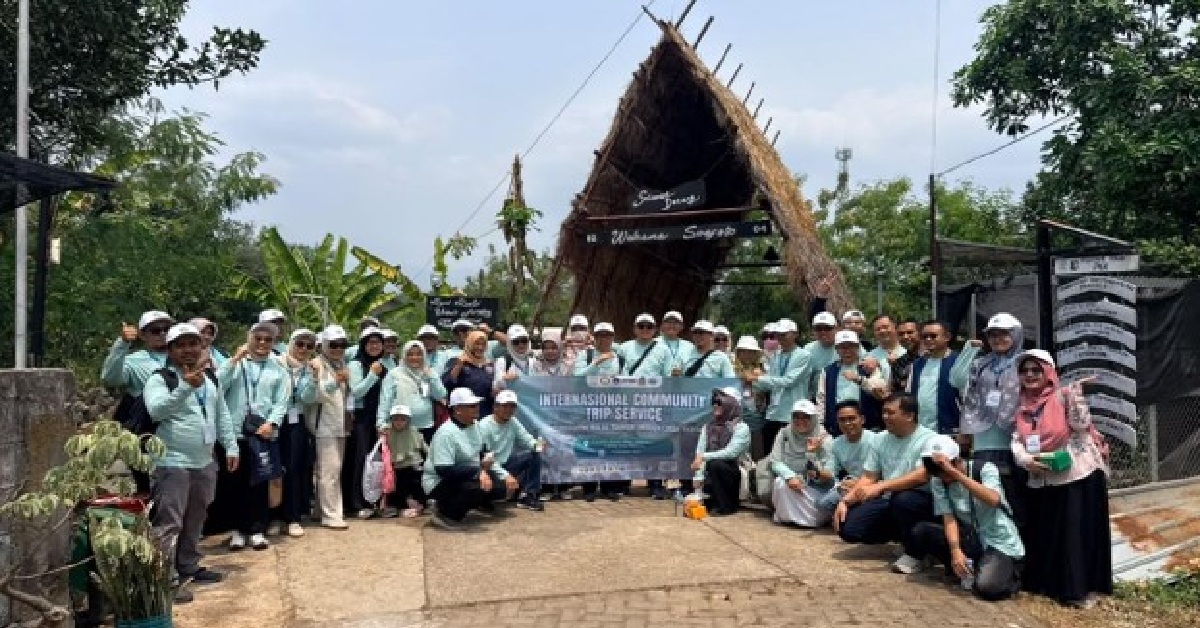
APSEII Hosts International Community Service in Jatirejo, Semarang, Showcasing Local Heritage-Based Halal Tourism Potential
Semarang, September 8, 2026 — The Association of Indonesian Islamic Economics Study Programs (APSEII) held an International Community Service event titled “Understanding Halal Tourism Through Local Heritage” at the Jatirejo Tourism Village in Gunungpati, Semarang, on Tuesday (September 8, 2026).
This event was part of the APSEII Plenary Session series hosted by Semarang State University (UNNES). Approximately 56 participants attended, comprising heads of study programs and representatives from Islamic Economics study programs at various universities across Indonesia.
Jatirejo was selected as the venue due to the local potential possessed by the community, particularly regarding the development of tourism villages, MSMEs (Micro, Small, and Medium Enterprises), culture, and local wisdom. Jatirejo is known as a tourism village that develops various attractions based on community assets, including local products and educational tourism.
In his remarks, the Head of Jatirejo Village stated that Jatirejo serves as a reference point and a learning site for village development at the national level, noting that it is considered the best village in Central Java.
Ali Rama, Head of the Sharia Economics Study Program at the Faculty of Economics and Business (FEB), UIN Syarif Hidayatullah Jakarta, expressed his appreciation for the event.
“This community service activity is a highly positive initiative for enhancing the engagement of the academic community with the public. Universities should not only be present through academic activities but also need to interact directly with the community, especially with MSME players and small and medium-sized enterprises.”
According to Ali Rama, the theme “Understanding Halal Tourism Through Local Heritage” is highly relevant because the development of halal tourism is not merely about halal service aspects; it also involves how culture, local wisdom, MSMEs, and community economic potential can become part of a tourism ecosystem that benefits the local population.
“Jatirejo offers an important lesson: that local potential can be developed into a source of community economic strength. This provides an excellent platform for Islamic economics study programs to bridge theory, research, and community service.” This initiative aims to strengthen collaboration among APSEII, higher education institutions, local governments, tourism village managers, and the community, while simultaneously fostering the development of a halal tourism model grounded in local heritage, MSME empowerment, and sustainability.
Through this activity, APSEII reaffirms its commitment to ensuring that higher education in Islamic economics not only excels in academic advancement but also actively engages with and delivers tangible benefits to the community.