
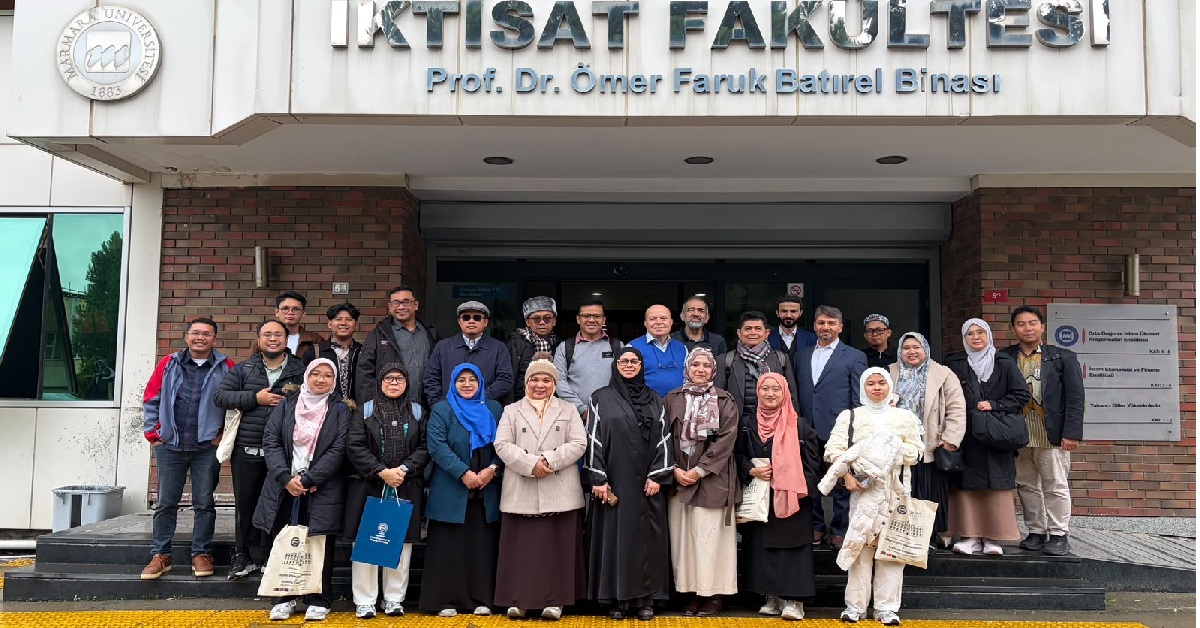
Lecturers and Students of the Master’s Program in Islamic Economics at UIN Jakarta Visit MÜİSEF (Marmara University Institute of Islamic Economics and Finance) in Istanbul, Türkiye
ISTANBUL, Türkiye – Friday, October 30, 2026 – Lecturers and students from the Master’s Program in Islamic Economics (MES) at the Faculty of Economics and Business (FEB), UIN Syarif Hidayatullah Jakarta, conducted an academic visit to the Marmara University Institute of Islamic Economics and Finance (MÜİSEF) as part of an international MBKM (Independent Learning, Independent Campus) initiative.
The event, held at the institute’s building on the Göztepe Campus, was attended by 10 students—ranging from undergraduate (S1) to master’s (S2) and doctoral (S3) levels, including four students from the MES program—along with eight lecturers. The four MES students joined peers from other programs and faculties. The delegation was welcomed by the leadership and faculty of MÜİSEF, including the Institute’s Director, Prof. Dr. Ertuğrul Boynukalın; Deputy Directors Prof. Dr. Şakir Görmüş and Prof. Dr. Saim Kayadibi; and Asst. Prof. Dr. Amal Essayem.
The visit aimed to explore academic collaboration between FEB UIN Jakarta and MÜİSEF, covering initiatives such as guest lectures and international student mobility.
Welcoming Remarks and Presentations by the Host
The MÜİSEF team welcomed the delegation and expressed their openness to the exchange of students and academics, for both short-term and long-term periods. The hosts also invited the visiting lecturers and students to submit their manuscripts to the institute’s academic journal.
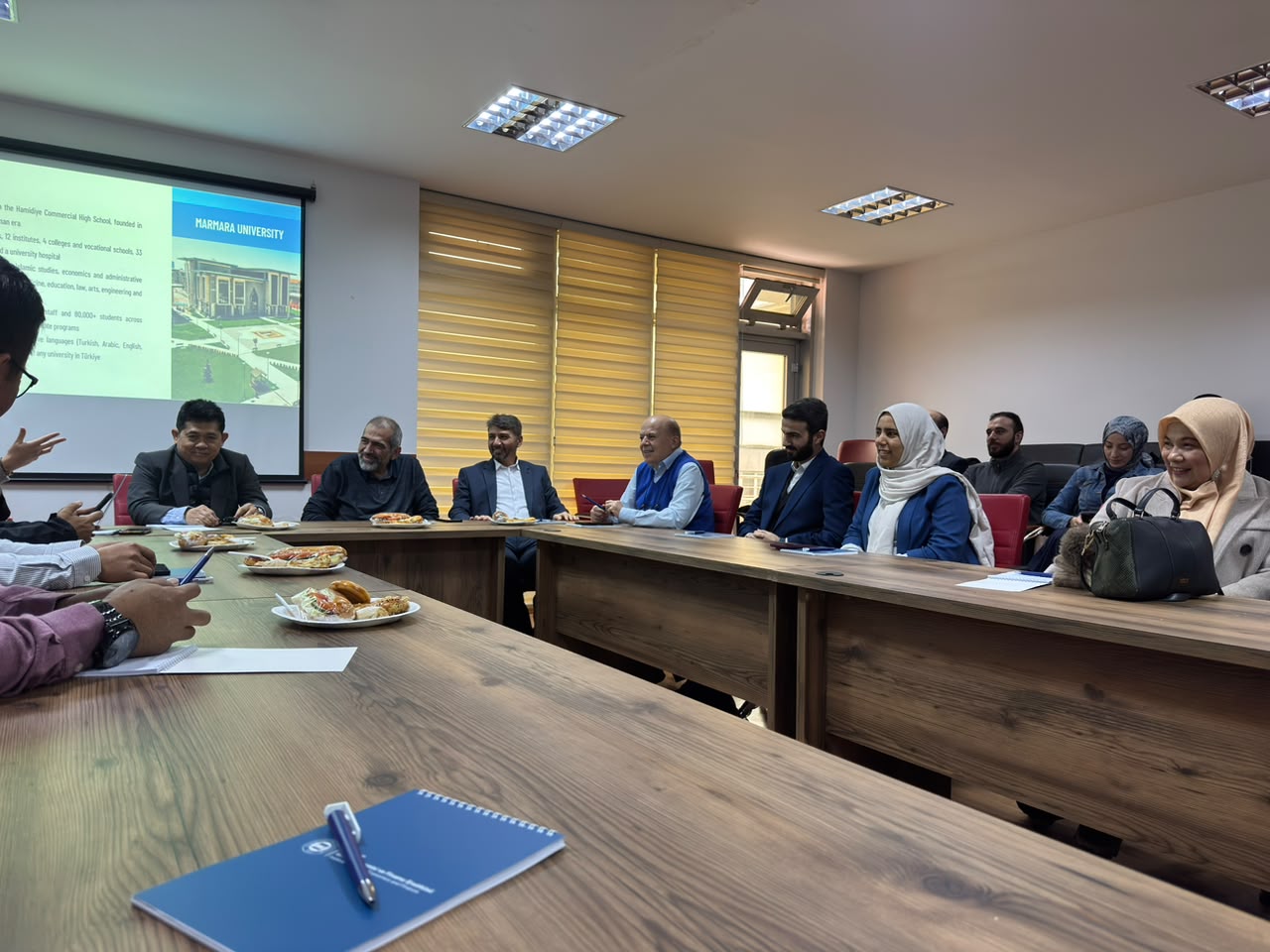
A scene from the meeting between the delegation from UIN Syarif Hidayatullah Jakarta and the representatives of MÜİSEF, Marmara University, held in the institute’s meeting room in Istanbul.
Roles of MES Students and Lecturers
The MES (Master of Islamic Economics) students introduced themselves and their academic backgrounds, while the lecturers outlined the purpose of the visit and proposed potential collaborations. These proposals included joint online classes, a "sandwich" program (one year in Indonesia and one year or one semester at Marmara), collaborative research, and supervision for doctoral programs. The lecturers also noted that an ASEAN Islamic finance conference—held the previous week and involving seven universities—had sparked an initiative to develop case studies.
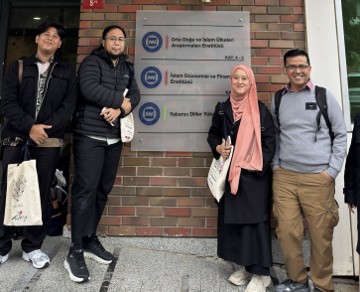
The Head of the Master of Islamic Economics Study Program at the Faculty of Economics and Business (FEB), UIN Syarif Hidayatullah Jakarta, alongside students participating in the international MBKM (Freedom to Learn, Freedom to Campus) program, standing in front of the signage for the Institute of Islamic Economics and Finance (İslam Ekonomisi ve Finansı Enstitüsü) at Marmara University.
About Marmara University and MÜİSEF
Marmara University traces its roots back to the Hamidiye Commercial High School, established during the Ottoman era in 1883, and currently enrolls over 80,000 students. MÜİSEF was founded on April 17, 2019, by a presidential decree of the Republic of Türkiye, becoming the country’s first institute dedicated exclusively to the study of Islamic economics and finance. Established in collaboration with the Finance Office of the Presidency of the Republic of Türkiye, the institute offers master’s programs in Turkish, English, and Arabic, attracting students from various countries, including Indonesia and Malaysia.
Exploring Collaboration
Both parties discussed the drafting of a Memorandum of Understanding (MOU) and the utilization of the Erasmus scheme. The draft MOU prepared by FEB UIN Jakarta will be reviewed by MÜİSEF and subsequently forwarded through their international relations office to the university rectorate to ensure alignment with Marmara’s internal regulations. MÜİSEF has a standard template available, and the agreement can be signed digitally. As an MOU typically remains in effect for five years without automatically providing mobility funding, the Erasmus program was proposed as the most accessible pathway to facilitate the mobility of students and faculty. The host also proposed the compilation of a book or a collection of case studies on Islamic social finance in Indonesia, as well as the exploration of a joint study forum involving regulators, academics, and practitioners, with a target date of 2027. This initiative is expected to pave the way for broader and more sustainable academic collaboration between the two institutions.
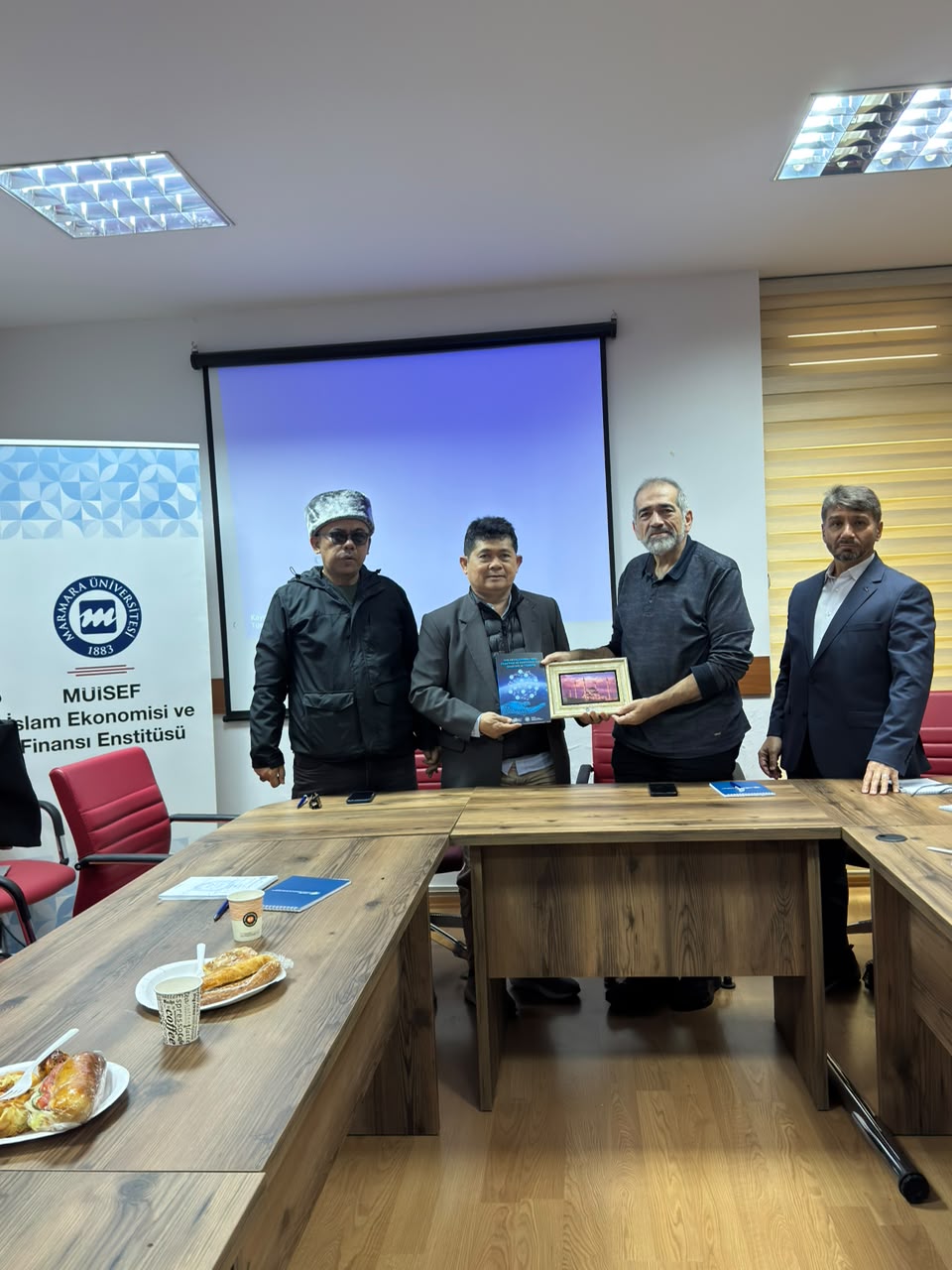
The Dean of the Faculty of Economics and Business (FEB) at UIN Syarif Hidayatullah Jakarta, Prof. Dr. Ibnu Qizam, M.Si., presented a memento to the Director of MÜİSEF, Prof. Dr. Ertuğrul Boynukalın. They were accompanied by the Vice Dean for Student Affairs and Cooperation, Asyari Hasan, M.Ag., CM, and Prof. Dr. Saim Kayadibi, a professor at MÜİSEF. (mes)