Promoting a Sustainable Halal Ecosystem, the Sharia Economics Student Association of FEB UIN Jakarta Successfully Holds the 2026 Sharia Economic Festival National Seminar
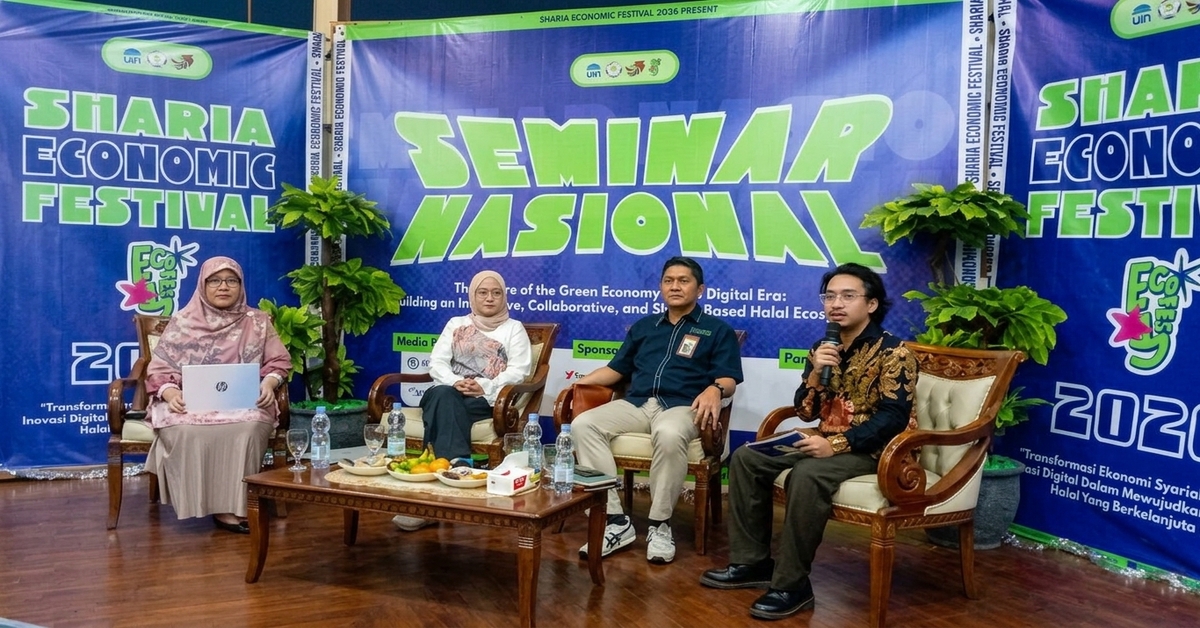
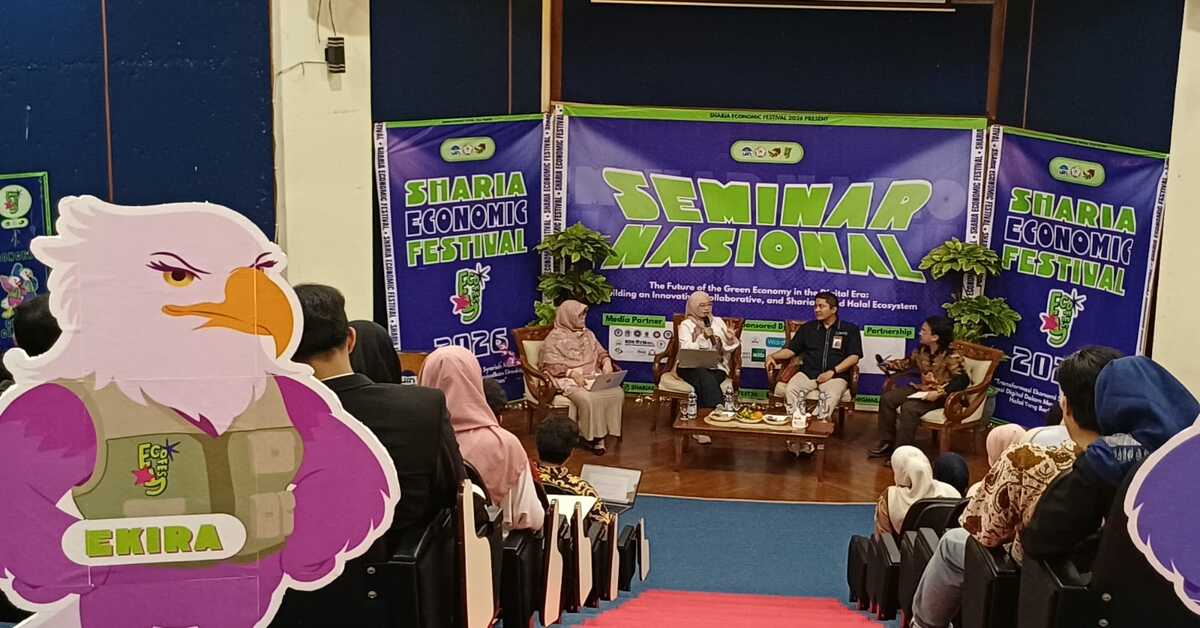
TANGERANG SELATAN, NOVEMBER 4, 2026 – The Sharia Economics Student Association (HMPS) of the Faculty of Economics and Business (FEB), UIN Syarif Hidayatullah Jakarta, successfully organized the National Seminar of the Sharia Economic Festival (ECOFEST) 2026. The event took place on Wednesday, November 4, 2026, at the Theater Room of the FEB Building, located at Jalan Ir. H. Juanda No. 95 / Jalan Ibnu Sina, Ciputat, South Tangerang.
The event, which carried the theme "Transforming Sharia Economics through Digital Innovation in Realizing a Sustainable Halal Ecosystem," was attended by hundreds of students from the Sharia Economics Study Program.
On this occasion, the Secretary of the Sharia Economics Study Program at FEB UIN Syarif Hidayatullah Jakarta, Dr. Mohammad Lutfi, expressed high appreciation for the successful organization of this national seminar.
"This national seminar features numerous experts in sharia economics who bring up-to-date knowledge regarding the development of sharia economics and finance in Indonesia. Undoubtedly, this is highly beneficial for students in broadening their academic horizons and industry readiness," stated Dr. Mohammad Lutfi on the sidelines of the event.
Expert Material Presentation & Strategic Issues
The national seminar featured prominent speakers and experts in sharia economics, including Dr. Sutan Emir Hidayat (Director of Sharia Ecosystem Infrastructure at KNEKS) and Dr. Nur Azifah, S.E., M.Si., Akt., C.A.:
-
Strengthening the Halal Ecosystem & Digital Innovation (KNEKS)
-
Dr. Sutan Emir Hidayat presented the contribution of the Halal Value Chain (HVC), which now accounts for more than 26% of the national GDP. The role of digital technologies, such as blockchain (Halal Traceability), banking and BMT 4.0 digitalization, up to digital business matching platforms, serves as the backbone in strengthening Indonesia's halal ecosystem toward becoming the global hub of sharia economics.
-
-
Sharia Financial Literacy and Inclusion
-
Dr. Nur Azifah emphasized the importance of sharia economic literacy as the "operating system" that drives a sustainable halal ecosystem. Facing the challenges of the national sharia financial literacy and inclusion indices, a pentahelix collaboration model (involving academics, government, business actors, communities, and media) is required to promote halalan thayyiban across the entire value chain.
-
Interactive Discussion and Conclusion
Enthusiasm was high throughout the interactive discussion session, as students actively raised questions regarding career opportunities, the integration of sharia contracts into startup digital platforms, and the optimization of the real sector of the halal industry. The committee also presented tokens of appreciation to active participants during the Q&A session.
The Sharia Economic Festival 2026 National Seminar series concluded officially with the presentation of certificates of appreciation to the speakers and moderator, followed by a group photo session involving study program leadership, speakers, and all participating students. (AC)