
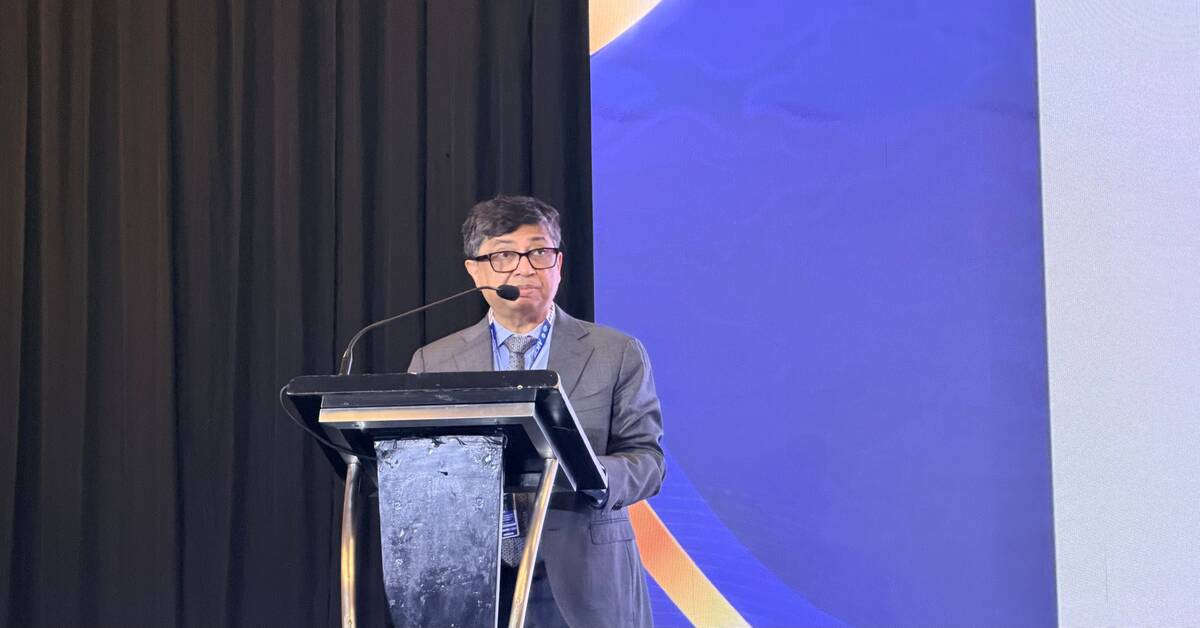
The 14th AICIF at UIN Jakarta: Prof. Kabir Hassan Emphasizes the Importance of Substance and Continuous Innovation in Global Islamic Finance
JAKARTA, OCTOBER 13, 2026 — UIN Syarif Hidayatullah Jakarta officially held its Annual International Conference on Islamic Finance (the 14th ASEAN Universities International Conference on Islamic Finance). With the theme “Islamic Finance in the Contemporary Global Economy: Innovation, Stability, Sustainability, and Inclusive Development,” this international conference featured world-renowned Islamic finance expert Prof. M. Kabir Hassan, Ph.D., from the University of New Orleans, United States, as the keynote speaker.
In his presentation, Prof. Kabir Hassan offered an in-depth reflection on the future and strategic role of the Islamic finance industry amid global economic uncertainty, political fragmentation, and the challenges of climate change. He emphasized that Islamic finance must move beyond merely replicating conventional products toward integrated ethical finance that has a tangible impact on society (substance over form).
Assets Reach US$6.5 Trillion, but Impact Quality Is Key
Prof. Kabir Hassan highlighted the rapid growth of the Islamic finance industry, which is now estimated to reach US$ 6.5 trillion by 2025 and is projected to grow to US$ 10.5 trillion by 2030. However, behind this growth in asset figures, he pointed out the paradoxical challenges of inclusion and penetration, which still do not match the global Muslim population or real development needs.
“The main test for Islamic finance is not whether we can replicate every conventional product in a Sharia-compliant form, but whether we are capable of allocating capital more responsibly, absorbing shocks fairly, and credibly financing the transition to sustainability,” said Prof. Kabir Hassan.
The Four Main Pillars of the Future of Islamic Finance
At the 14th AICIF, Prof. Kabir Hassan outlined four interrelated main pillars for the future of Islamic finance:
1. Innovation: The use of fintech, AI, and tokenization to expand accessibility and transparency without losing sight of ethical principles.
2. Stability: Resilience against financial imbalances and risks through direct linkage to real assets.
3. Sustainability: The development of climate finance instruments and ESG Sukuk with credible taxonomies and impact verification.
4. Inclusion: Integrating Islamic social finance (Zakat, Wakaf, Qardhul Hasan) with the commercial financial sector to create a measurable engine of development.
Spotlight on Indonesia’s Green Sukuk Leadership
In his case study presentation, Prof. Kabir Hassan gave special recognition to Indonesia’s Green Sukuk as a global success story in mobilizing public funds for the climate transition. Indonesia has issued more than US$11.5 billion in cumulative Green Sukuk from 2018 to 2024 (including Retail Green Sukuk, which successfully raised approximately US$2.8 billion directly from the public), successfully funding environmental sustainability projects and carbon emission reduction initiatives.
He encouraged Indonesia to continue strengthening its integrated leadership strategy by connecting the Islamic capital market, fintech, the real sector, zakat and waqf institutions, as well as networks of Islamic boarding schools and universities.
Commitment of UIN Syarif Hidayatullah Jakarta
The hosting of the 14th AICIF at UIN Syarif Hidayatullah Jakarta served as a significant milestone in strengthening the role of academics and research in advancing the Islamic finance industry. The conference was attended by hundreds of academics, practitioners, regulators, and students from various countries who came together to discuss research agendas, policy formulation, and the global roadmap for Islamic finance. (AC)