
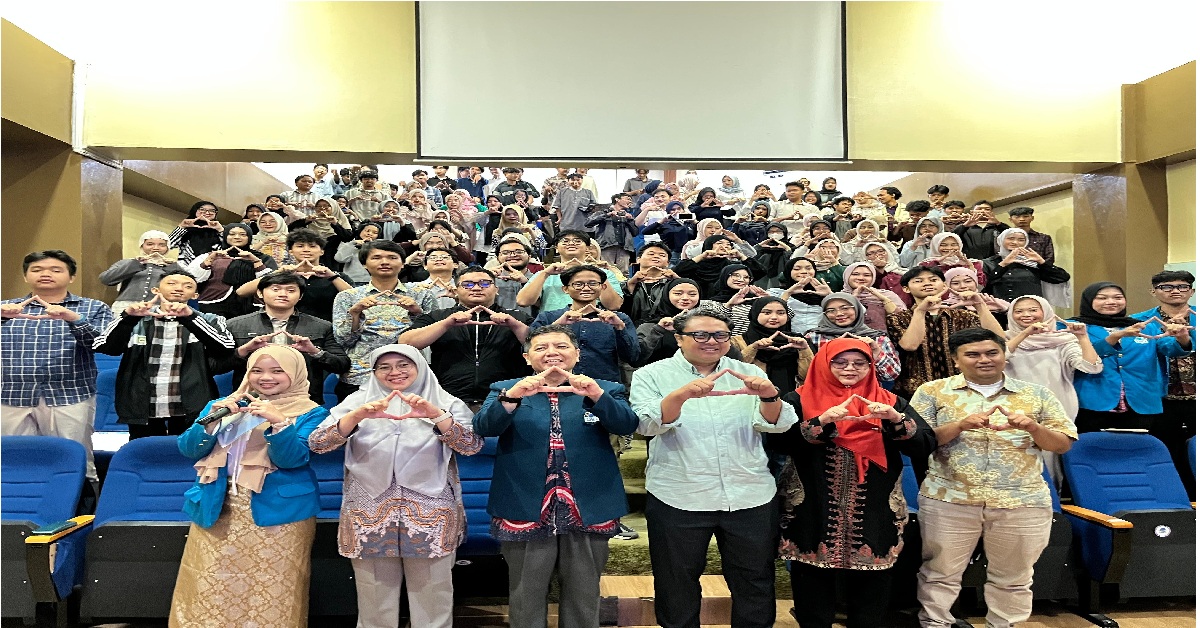
The Accounting Study Program, together with the Indonesian Institute of Accountants, held a seminar titled "Beyond the Ledger — Becoming a 5.0 Accountant Who Masters AI, Data, and Sustainability."
South Tangerang, May 13, 2026 – The Accounting Study Program, Faculty of Economics and Business, UIN Syarif Hidayatullah Jakarta, in collaboration with the Accounting Department of the Accounting Services Office (KAKJA-IAI), held a seminar with the theme "Beyond the Ledger — Becoming a 5.0 Accountant Mastering AI, Data, and Sustainability." This seminar aimed to equip accounting students with insights into professional transformation in the digital era and strengthen the foundation of professional ethics based on Islamic values.
The event began with an opening by the Master of Ceremonies, followed by the recitation of verses from the Quran, the singing of Indonesia Raya and the UIN Hymn, and remarks by the Deputy Dean I for Academic Affairs of the Faculty of Economics and Business, UIN Syarif Hidayatullah Jakarta, Dr. Sofyan Rizal, SE., M.Sc., and a video welcome from the Chair of KAKJA-IAI, Dr. Susan Sutedjo, SE, M.M., M.Ak., Ak., CA. Following a group photo session and the screening of the IAI profile video, the event moved into the main session, with a presentation by Mr. Brian Pramudita, M.Ak., CA., CPA., BKP., CIB., CCA., a member of the KAKJA-IAI Management Board, moderated by Dr. Yessi Fitri, S.E., M.Si., Ak., CA.
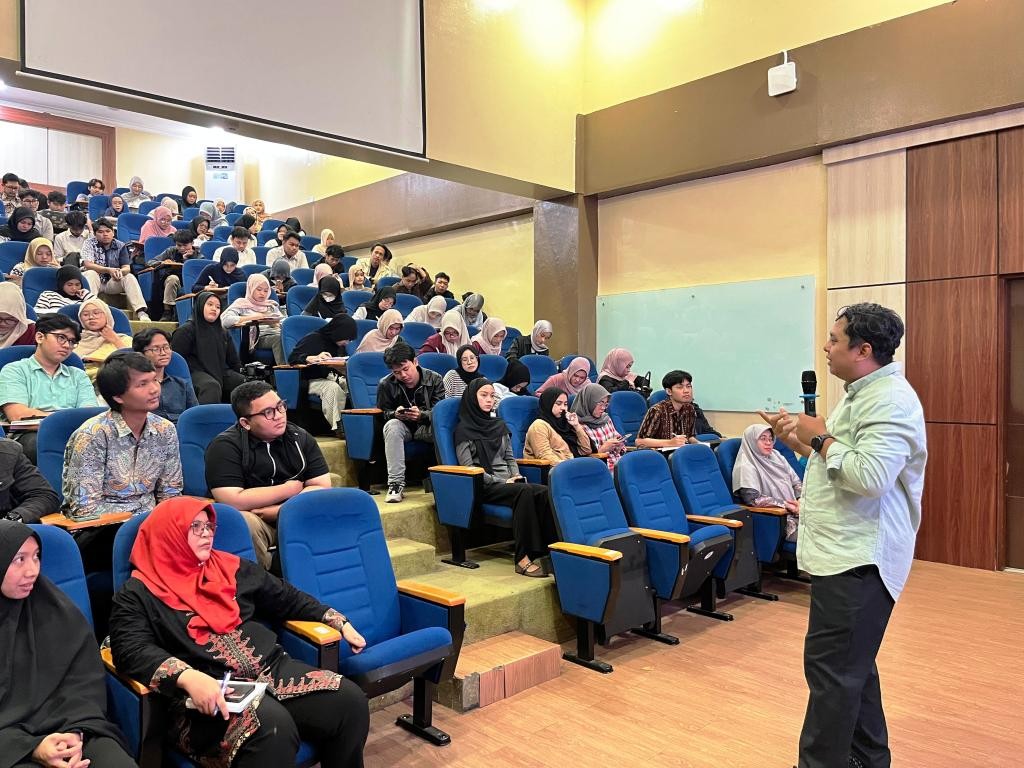
In his presentation, the speaker explained that the accounting profession will not disappear but will evolve, with 40% of routine accounting tasks potentially being automated, requiring future accountants to master three main pillars: AI, Data, and Sustainability. He also presented various inspiring case studies, such as the failed audits of Jiwasraya, Wirecard, and Garuda Indonesia, as lessons on the importance of trust and professional skepticism. He also presented the success stories of Patagonia, the implementation of AI in audits by EY Helix, and the issuance of Green Sukuk Indonesia, a global leader in sustainable Islamic finance. The presenters also emphasized the six foundations of Muslim accountants: accounting as a command (Quran, Al-Baqarah: 282), professionalism (itqan), verification (tabayyun), trustworthiness (amanah), khalifah fil ardh (vicegerent), and the obligation of lifelong learning. The event continued with an interactive question and answer session between participants and the presenters.
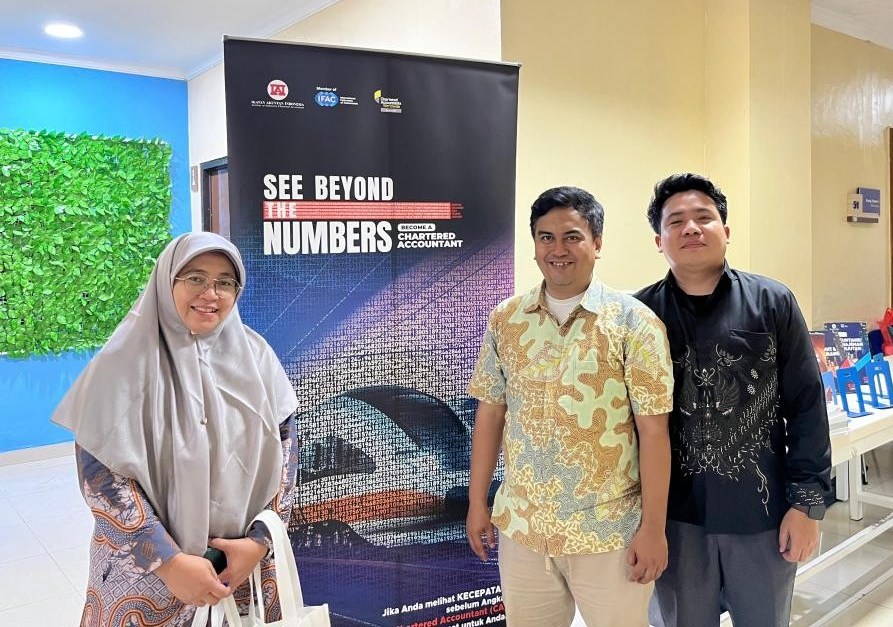
The event concluded with the presentation of certificates to the presenters and moderator, a prayer, and a closing ceremony. Through this seminar, it is hoped that accounting students will be able to transform into Accountants 5.0 who not only master technology but also remain steadfast in their conscience, trustworthiness, and responsibility to Allah SWT, values that cannot be automated.