
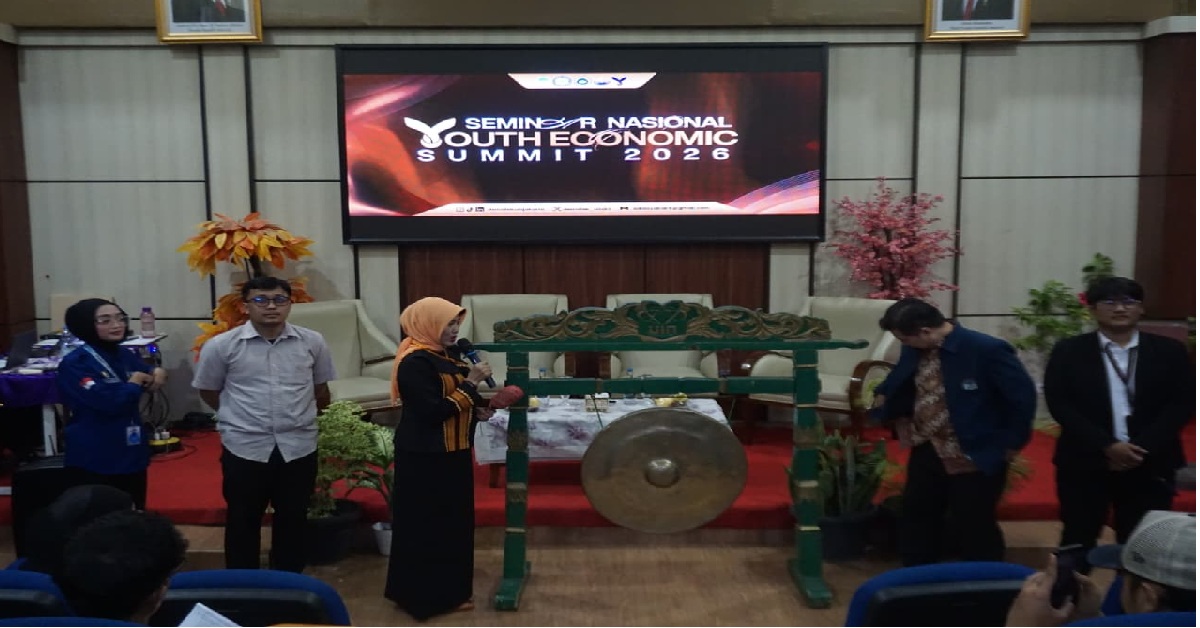
YES 2026 Opens, FEB UIN Jakarta Students Invited to Critically Face Global Economic Uncertainty
Ciputat, November 12, 2026 - Amidst the shadow of global economic uncertainty and the acceleration of digital transformation that demands high levels of adaptation, the Student Council of the Faculty of Economics and Business of Syarif Hidayatullah State Islamic University Jakarta (DEMA FEB UIN Jakarta) officially opened the 2026 Youth Economic Summit (YES) series. Held at the FEB UIN Jakarta's Tilted Theater, this national seminar raised the overarching theme "Navigating Indonesia's Future: National Stability, Financial Innovation, and Public Leadership in an Era of Global Uncertainty."
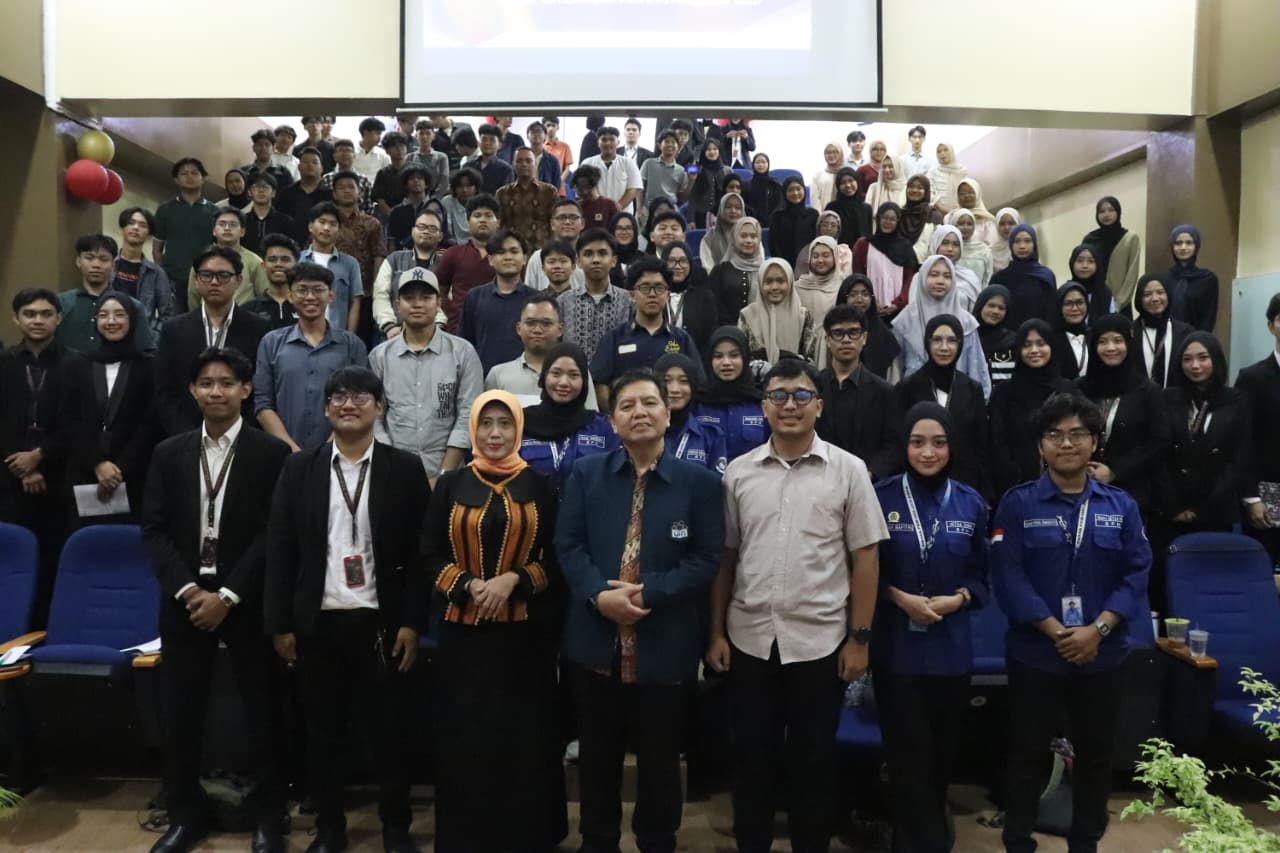
Attended by more than 100 students, the event was designed not simply as a ceremonial opening event for the work program, but as a forum for intellectual discourse to examine the close relationship between public policy, banking resilience, and the critical thinking of the younger generation in safeguarding the nation's economy.
The series of events began with reports and remarks from faculty leaders and student organizations. Dr. In his remarks, Sofyan Rizal, M.Sc., Deputy Dean I of the Faculty of Economics and Business (FEB) at UIN Jakarta, emphasized the importance of students' continuous innovation, utilizing the academic spaces provided, and preparing themselves to become agents of change with solutions. Echoing this sentiment, the President of the Student Executive Board (DEMA) of FEB UIN Jakarta, Erma Safitri, emphasized that YES 2026 was presented as a strategic platform to address the challenges of the times by strengthening students' intellectual capacity.
The seminar's opening ceremony was officially marked by the striking of a gong, which took place immediately after the keynote speech and before the presentations.
The introductory session presented national perspectives from the legislative and executive branches. Dr. Mardani Ali Sera, M.Eng., a member of Commission II of the Indonesian House of Representatives (DPR RI), presented his views online, underscoring the importance of prepared public leadership in formulating policies that adapt to the dynamics of the times.
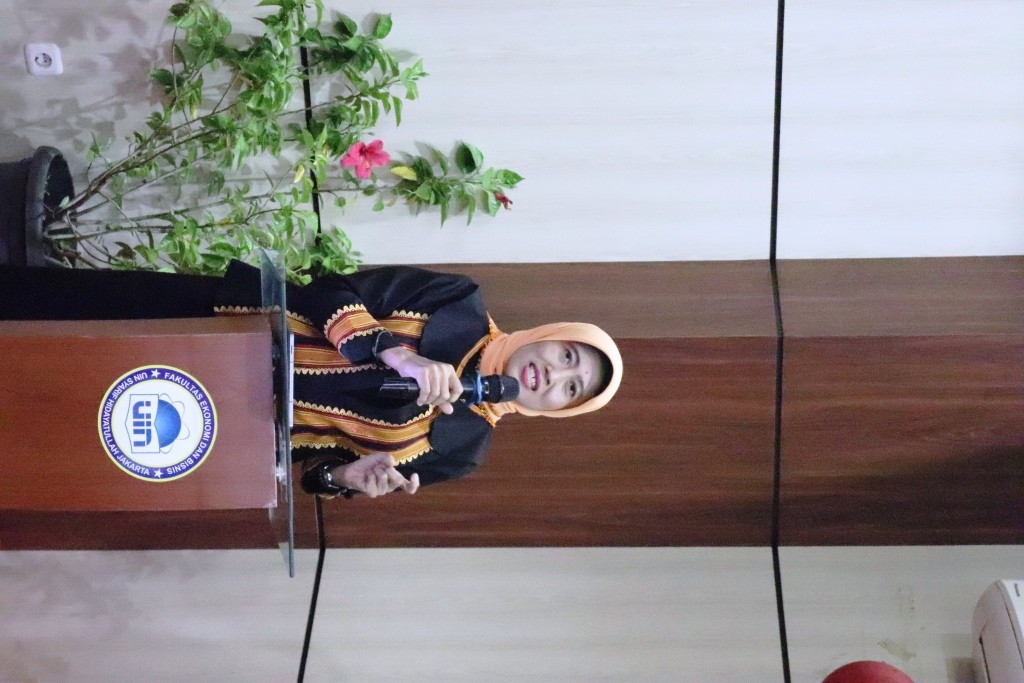
Meanwhile, Henny Navilah, S.H., LL.M., Expert Staff for Inter-Agency Relations at the Ministry of Cooperatives, was present in person, representing the Minister of Cooperatives, Ferry Juliantono. Henny explained that the current national economic landscape faces a significant challenge.
"Today's youth face complex challenges in maintaining our country's economic system, from technological acceleration to connectivity with the outside world," Henny stated before hundreds of participants.
The material session featured two speakers from academic backgrounds and financial authorities to explore the substance of the economy in depth. The first session was led by Nawaz Syarif, S.H., Chairman of the IMMH FH UI.
Nawaz highlighted the importance of moral courage among students to continually evaluate government policies. He argued that the function of social control must be carried out objectively and based on mature arguments. "We must have the courage to say if a policy is not in line with the goal of public welfare, or if the policy is correct but the method is wrong. It's the same thing, just criticize it," Nawaz emphasized.
The second session on financial stability was delivered by Januar Hafidz, S.E., M.App. Fin., Deputy Director, Head of the Banking Vulnerability Assessment and Study Group. Januar outlined the dynamics of banking sector vulnerability amidst global turmoil. He explained key indicators of macroprudential stability and how external uncertainties, such as fluctuations in global financial markets and supply chains, directly affect the transmission of monetary policy and the health of the domestic financial sector.
Interviewed after the event, Khansa, a member of the YES 2026 core organizing committee, emphasized the urgency of choosing this theme to broaden students' thinking. "We want FEB students to see that economic stability, financial innovation, and public policy are closely interconnected in determining Indonesia's future direction. Through this forum, students are encouraged to not only master classroom theory but also be sensitive to current issues and develop critical thinking skills," Khansa explained. (dema)